
The exhibition Groundwork at Gallery 1, Keyes Art Mile, explores Johannesburg’s material history through art crafted from natural and industrial elements
By David Mann
Across Jellicoe Avenue in Rosebank, Johannesburg, a large hole is forming. From the top of the stairs leading up to Keyes, you get a clearer view of what’s transpiring — tonnes of earth are being excavated and carted off in trucks, making way for something big. The plan is Keyes 2.0, a new urban precinct on the Keyes Art Mile featuring gallery spaces, restaurants, residential units, retail space and more.
Inside 19 Keyes (the Trumpet Building), Gallery 1 is exhibiting Groundwork, a new group exhibition of South African modern and contemporary art from the private Tortilis Collection. As the adage goes, art mirrors life. Here, Groundwork echoes the materiality of a construction site — dust, earth, soil, mud and more.
Exhibited a stone’s throw from this breaking of new ground across Jellicoe, Groundwork looks at artists who’ve worked with natural and industrial materials and practices to speak to site, form, and our fundamentally human connection to the earth. The principle of the show is a grounded, earthy materiality.
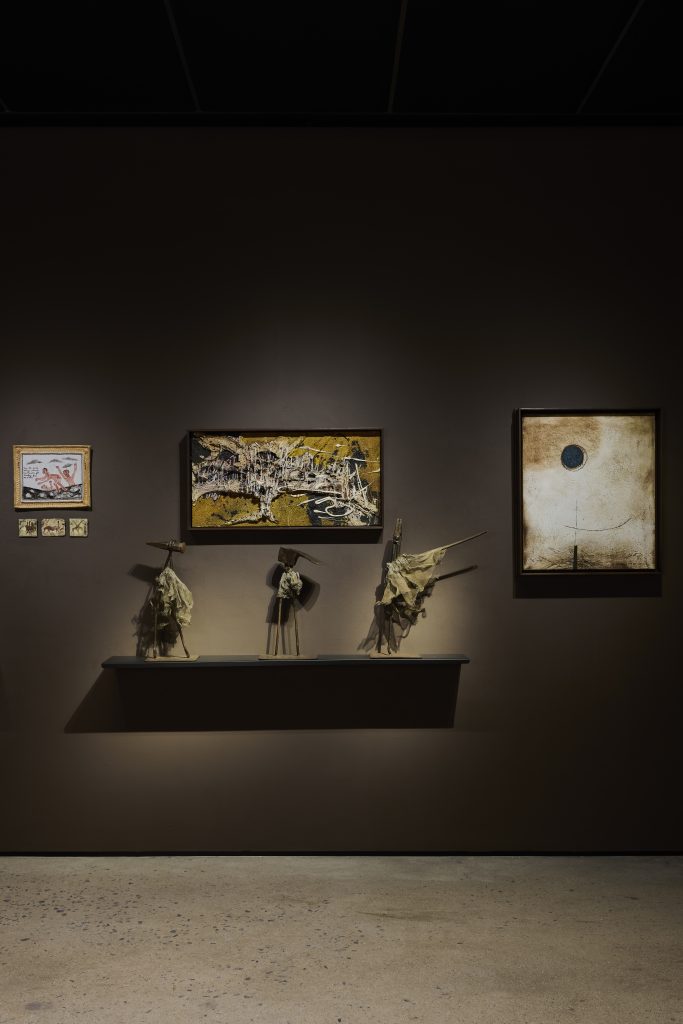
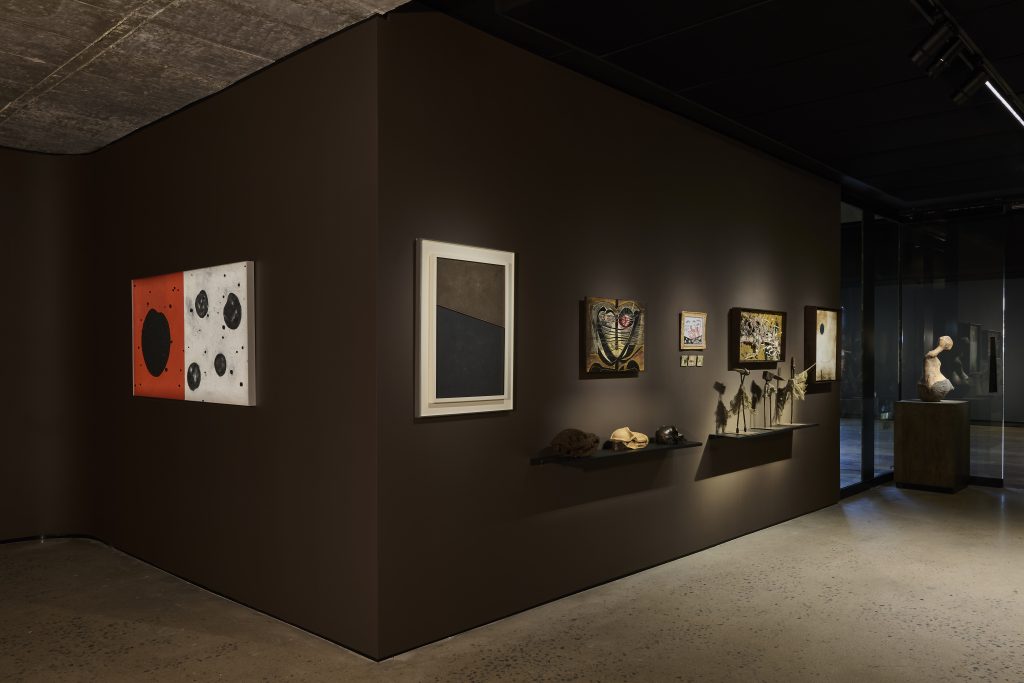
This is immediately recognisable in works such as one by Christo Coetzee, whose “Yellow Abstract” uses sand and slathers of silicon to create a layered, gritty painting, or Sandile Zulu’s triptych, “Shaft Street Runs Through Storm Hill”, which lists its materials, rather wonderfully, as “fire, water, wind and dust on paper”. Regular visitors to Gallery 1 might remember these two works from their 2024 exhibition, Non-forms: the geometry of imagination, but here they take on an entirely new sensibility, reflecting the tactility and alchemy of nature.
In Groundwork there is stone, slate, carbon, clay, cow dung, wood, ceramic and more. Many works are shaped through similarly natural processes, explains the exhibition catalogue: “Layering, carving, burning, compression and erosion; actions that mirror natural forces and construction activity.” But this is not an exhibition in conversation with the emergent construction and architecture across the road. Rather, it’s a reflection on the ancient, contemporary, and everyday materials that facilitate our lives in Johannesburg.
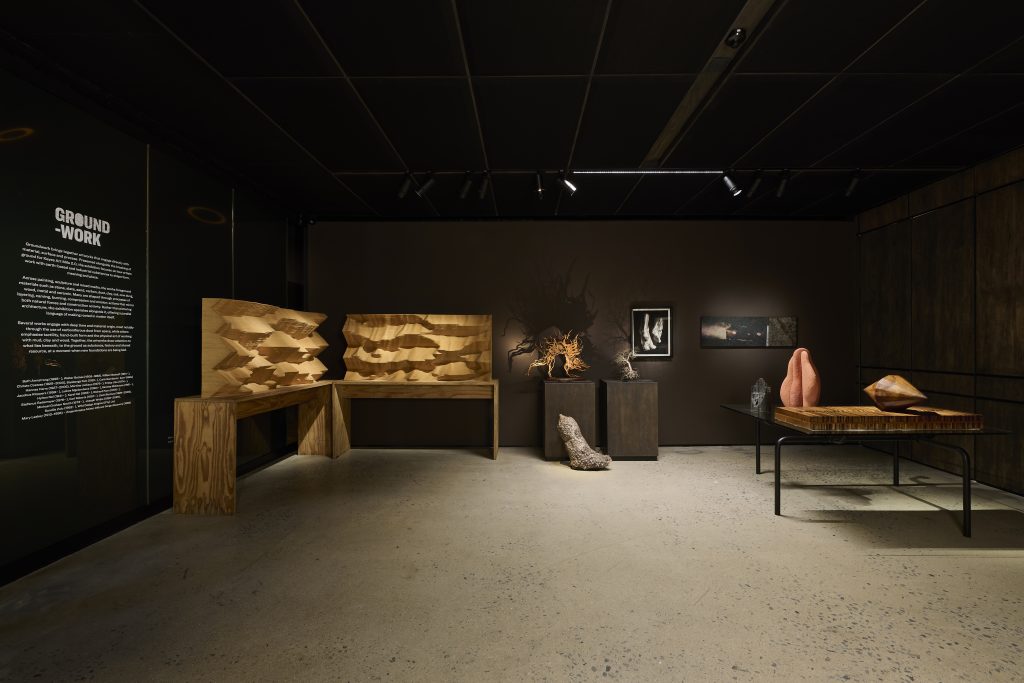
Recycled cork and Jacaranda wood are among the materials used in the build, echoed here in a dark cork hyena skull by Laurie Wiid van Heerden and a baboon skull carved from Jacaranda by Friday Jibu. “Cog-machine-unknown”, a ceramic sculpture by Richard Penn, echoes the layered depths of excavation, while “Strata”, a small sculpture of a tree anchored in finely wrought steel forms by Beth Armstrong, speaks to the uniquely paradoxical nature of Johannesburg — a human-made forest rooted in urban infrastructure.
All of the works in this exhibitionhold or speak to some form of sand, soil, mud, steel, or plant matter. Historically, these are the materials that form part of Johannesburg’s natural landscape, and they’re the materials being used or unearthed on the construction site, too.
“Three Graces”, a trio of playful sculptures by Carlo Gamberini, sees the artist taking old bronze-work tools from his family foundry, the Vignali Foundry in Pretoria, and crafting them into small, dancing figures. Each one sits here, liberated from the foundry floor, personified and full of life. Certainly, the tools are still “working” — an oil and sand painting by Hannes Harrs sitting to the right of the dancing sculptures carries what almost looks like an incidental mark from the leg of one figure.
If the first half of Groundwork is aimed at refamiliarising us with the natural world and getting us to look at this world through its disparate, material parts, then it’s the works towards the back of the gallery that remind us of our fundamental connection to the material rhythm and flow of the metaphysical world.
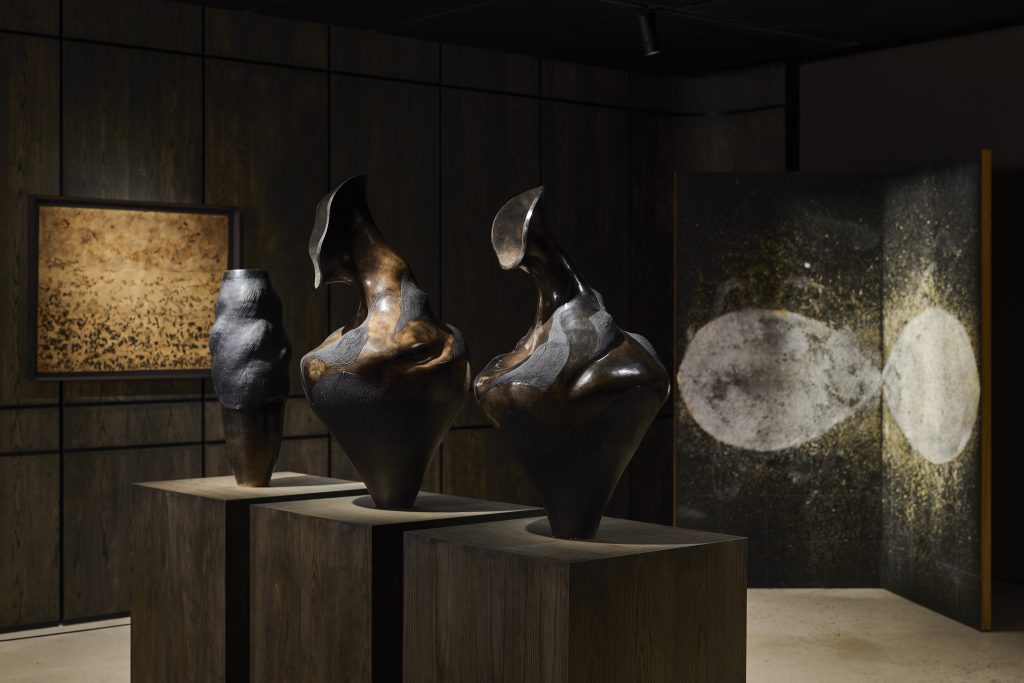
Two large works by Karel Nel, for example, use carboniferous dust from space, alongside salt crystals from the Atlantic Ocean. In “Primal Field”, Nel puts forward a cosmic clash. Energy is built up and released, causing clouds of whirling stardust to drift across precisely delineated fields. Here, in a gallery on the Highveld, one thinks of the meteorite that gave us the Vredefort dome, crash-landing and causing the ridges, the koppies, the gold seams and reefs to surface and give way to what would become Johannesburg.
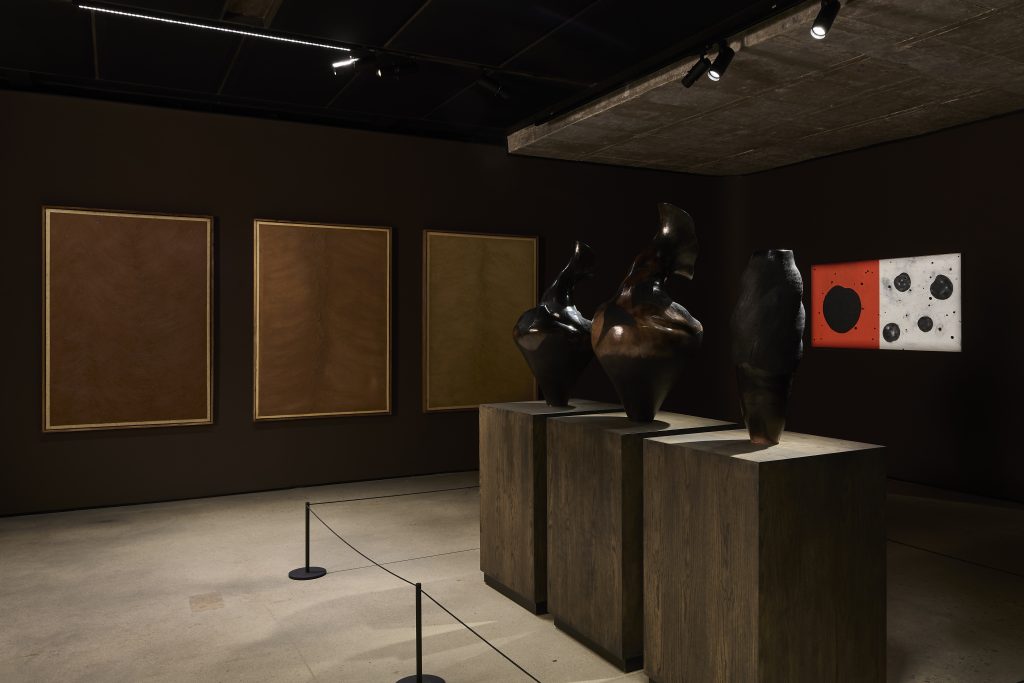
Engaged in quiet conversation with Nel’s works are the large and luminous works of Seretse Moletsane. They are hand-painted with sifted soil and cow dung and imbued with blue pigment to various extents. Five of Moletsane’s paintings occupy the back corner of the gallery. Some have a clear blue line running through them — a horizon line, a waterline — while the others are like aerial landscapes, full of movement and the artist’s gestures. In the latter, painting becomes an intuitive, corporeal act for Moletsane. Depending on how you see the work, what emerges is a furrow, or a cowhide. Either way, there is earth, land, and a sense of home.
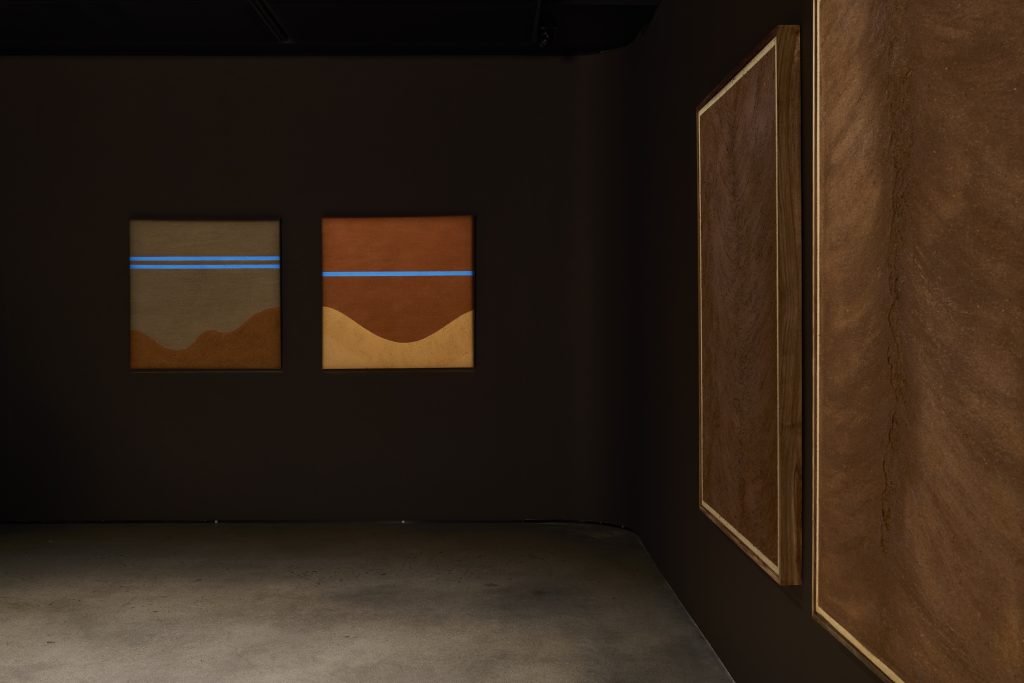
The central motif of this exhibition can be found between Moletsane and Nel’s works. Moletsane’s canvases depict an ancient connection to the land, while Nel’s are a cosmic speculation. Sitting quietly between these compelling conversations is a collection of Siyabonga Fani’s burnished, organic forms. Abstracted, smoky recollections of a pastoral homeland, they’re oddly figurative, too, with the small depression of a collarbone evident in each vessel.
And here is the essential meeting point of the exhibition site — materiality and form converging to speak to the fundamental relationship between humankind and the natural world. It begins, as always, with the soil.
Groundwork is on show at Gallery 1, Keyes Art Mile, until April 18.
Article received from: https://www.wantedonline.co.za/